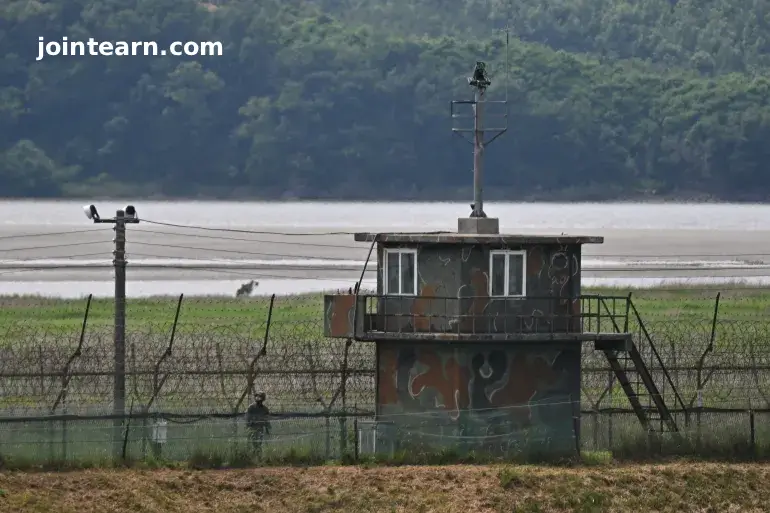
Seoul has formally proposed military talks with North Korea for the first time in seven years, aiming to prevent accidental clashes along the heavily militarized border and reduce ongoing tensions on the Korean Peninsula. The move comes amid reports of repeated demarcation line violations by North Korean troops.
Speaking at a news briefing on Monday, Kim Hong-cheol, South Korea’s deputy minister for national defense policy, emphasized the urgent need to use military-to-military channels to avert escalation.
“To prevent accidental clashes and ease military tensions, our military officially proposes that the two sides hold inter-Korean military talks to discuss the establishment of a clear reference line for the military demarcation line (MDL),” Kim said.
Context: The MDL and DMZ
The military demarcation line (MDL) runs through the Demilitarized Zone (DMZ), a 250 km (160-mile) long buffer zone dividing North and South Korea. The DMZ is roughly 4 km (2.5 miles) wide and is heavily fortified with combat troops, barbed-wire fences, tank traps, and an estimated 2 million landmines.
South Korea and North Korea technically remain at war because the 1953 Korean Armistice Agreement, which ended active hostilities, has never been replaced by a formal peace treaty. This long-standing technical state of war has made the MDL and DMZ one of the most sensitive and militarized borders in the world.
Recent Incursions by North Korea
Kim highlighted that North Korean forces have repeatedly crossed the MDL, engaging in activities such as:
- Building tactical roads and fences
- Laying landmines along the border
- Installing other military infrastructure within the DMZ
In response, South Korean troops have fired warning shots and broadcast messages urging the North Korean forces to retreat, according to officials.
President Lee Jae Myung’s Overtures to Pyongyang
The military proposal follows broader diplomatic efforts by South Korean President Lee Jae Myung. Since taking office in June 2025, Lee has taken significant steps to ease tensions with North Korea, including:
- Removing propaganda loudspeakers along the border
- Banning the distribution of anti-Pyongyang leaflets
- Offering unconditional dialogue with Pyongyang
These moves mark a sharp departure from the hawkish policies of Lee’s conservative predecessor, Yoon Suk-yeol, whose administration pursued a hardline stance and declared martial law in December, leading to his impeachment and removal from office.
Potential Significance of Military Talks
If North Korea accepts Seoul’s proposal, it would be the first inter-Korean military dialogue since 2018, signaling a potential thaw in relations and improved coordination to prevent inadvertent military incidents.
Experts suggest that clear agreements on the MDL could:
- Reduce border skirmishes
- Provide a framework for crisis management
- Build confidence for future diplomatic engagement
However, North Korea has yet to respond formally to Lee’s overtures. Analysts caution that Pyongyang may seek leverage in other areas, such as sanctions relief or military concessions, before agreeing to talks.


Leave a Reply