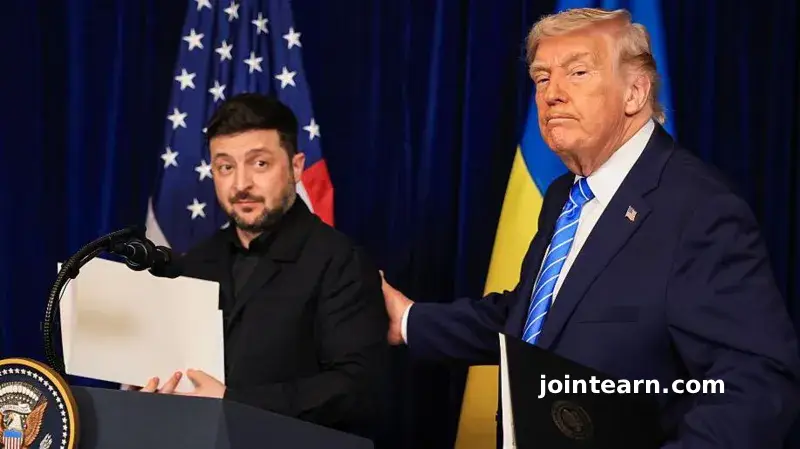
As peace talks between Ukraine and Russia inch closer to a potential resolution of nearly four years of full-scale war, some of the most challenging sticking points remain unresolved. President Donald Trump, involved in brokering aspects of the deal, described them as “one or two very thorny, very tough issues,” while Ukrainian President Volodymyr Zelensky emphasizes that any agreement must protect Ukraine’s sovereignty.
Key Issues Threatening the Deal
1. Fate of Ukraine’s Industrial Donbas
One of the most contentious points is the status of Ukraine’s industrial heartland in Donbas, including Donetsk and Luhansk regions.
- Russian President Vladimir Putin insists on full control of the area, including the remaining key cities of Sloviansk and Kramatorsk, which he refers to as part of a “fortress belt.”
- Zelensky has proposed a demilitarized or free economic zone policed by Ukraine, provided Russian troops withdraw an equivalent distance. The current line of contact could then be overseen by international forces.
- Ukraine faces strong domestic opposition to surrendering territory, citing the safety and rights of the 300,000 residents in the contested cities.
Analysts warn that without compromise on Donetsk, a peace deal could remain out of reach, though Kremlin envoy Yuri Ushakov suggested that a scenario with no troops on either side is possible, while still keeping Donbas under Russian sovereignty.
2. Zaporizhzhia Nuclear Power Plant
The Zaporizhzhia nuclear plant, Europe’s largest, remains under Russian occupation. The six reactors have been in cold shutdown for over three years, with Ukraine providing external power to prevent a meltdown.
- Ukraine has proposed demilitarizing the plant and creating a free economic zone, potentially jointly managed with the United States.
- Russia, through Rosatom head Alexei Likachev, insists that only Russia can operate the facility safely.
- Any compromise would require unprecedented trust between Ukraine and Russia, which is currently lacking.
3. Lack of Mutual Trust
Trust is a major barrier to progress. Zelensky openly stated he does not trust Putin to act in Ukraine’s best interests, rejecting claims that Russia seeks Ukraine’s success. Likewise, Russia has accused Ukraine of a drone strike on Putin’s residence, which Kyiv denies, further complicating negotiations.
4. Security Guarantees and Military Size
Ukraine is seeking NATO-style security guarantees in case of future Russian aggression and aims to maintain an 800,000-strong military force. While the US and Europe may support these measures, Russia opposes foreign troops on Ukrainian soil, making agreement difficult.
5. Financial Compensation and Reconstruction
Ukraine estimates $800bn in war-related damages, and discussions continue over how much Russia would contribute to rebuilding the country. The US has proposed a joint investment fund with Europe, while Russia holds approximately €210bn in European assets, which it has so far refused to release.
6. NATO and EU Membership
Russia rejects Ukraine’s bid to join NATO, a key part of Ukraine’s constitution. EU membership is also complicated, as accession timelines are uncertain, and European countries may be hesitant to fast-track Ukraine while a war continues.
7. Popular Referendum Requirement
Zelensky has suggested that Ukrainians should vote on any peace deal through a referendum after a 60-day ceasefire, ensuring the public’s approval. This is another potential sticking point, as the Kremlin believes a temporary ceasefire could prolong the conflict or enable renewed hostilities.
Timeline and Next Steps
- Zelensky is scheduled to meet European leaders in France on 6 January, where key points of the US-brokered 20-point peace plan will be discussed.
- Analysts note that both sides are strategically and physically exhausted, and military campaigns alone could take months to resolve territorial disputes in Donetsk and Luhansk.
Conclusion
While negotiations are technically “at a final stage,” the combination of territorial disputes, nuclear safety concerns, security guarantees, financial reparations, and public approval makes the Ukraine-Russia peace deal exceptionally complex. Any resolution will require significant compromises, international guarantees, and trust-building measures to ensure a sustainable and enforceable peace.


Leave a Reply