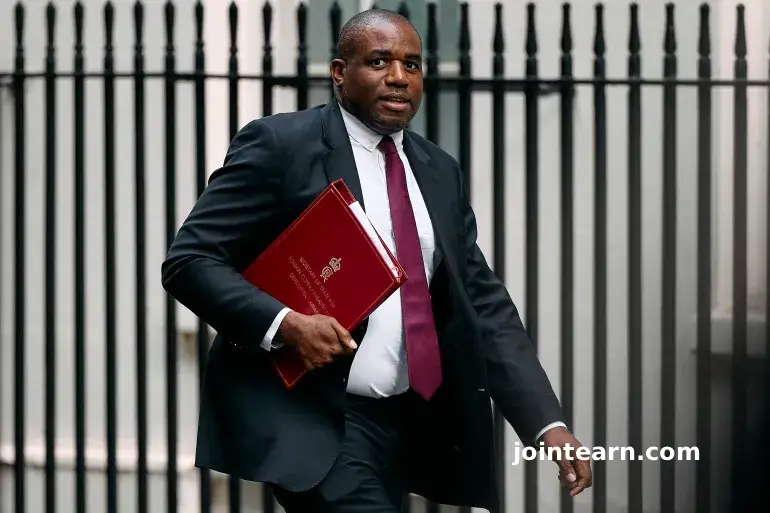
The United Kingdom is confronting one of the most significant shifts to its criminal justice system in decades, as Justice Secretary David Lammy introduces reforms that would sharply limit the right to a trial by jury in England and Wales. Jury trials — long viewed as a defining feature of British democracy — may soon apply only to the most serious crimes, prompting widespread controversy and legal pushback.
The government argues the move is necessary to fix an overwhelmed court system. Critics, however, warn that reducing public participation in trials could erode centuries-old protections and damage trust in the justice system.
What Changes Is the UK Government Proposing?
Under Lammy’s proposal, only cases involving the gravest offences — rape, murder, manslaughter, and a narrow set of crimes deemed to meet a “public-interest” threshold — will automatically qualify for a jury trial.
Most cases carrying sentences of up to three years, including many serious but non-violent offences, would instead be heard in new judge-only “swift courts.” These courts are part of a government plan to speed up trials and relieve pressure on Crown Courts, where jury trials traditionally take place.
The proposal does not apply to Scotland or Northern Ireland, which use separate legal systems.
Lammy also announced £550 million in new funding for victim support services, aiming to aid survivors and witnesses navigating the legal system.
Although initial government memos suggested Lammy would go further — allowing jury trials only for cases with potential sentences above five years — internal opposition from Cabinet members and legal experts led him to soften the scope of the changes.
Why Now? The Backlog Behind the Reforms
The UK’s criminal court system is facing an unprecedented backlog.
By June 2025, more than 78,000 cases were waiting to be heard in Crown Courts — the highest number on record. Case durations have also lengthened significantly, rising from 153 to 168 days since 2024.
Two main factors contributed to this crisis:
1. COVID-19 court closures and delays
Pandemic restrictions severely limited the number of trials that could be held, especially jury trials, which require larger rooms and more personnel.
2. Years of underinvestment
Justice officials, including Lammy himself, admit that chronic funding shortages and insufficient court staffing created a system too fragile to recover quickly.
Former judge Sir Brian Leveson led a government-commissioned review earlier in the year and concluded that eliminating juries from some cases could speed up trials without undermining fairness. Lammy now describes the situation as a “courts emergency”, warning that the backlog could approach 100,000 cases by 2028 without intervention.
Why Are the Reforms So Controversial?
Jury trials are deeply linked to British democratic identity. Many legal experts argue that removing them — even partially — risks weakening a system built on public participation and protection from state power.
Key criticisms include:
1. Threat to centuries-old legal rights
Mark Evans, president of the Law Society of England and Wales, called the proposals an “extreme measure” that goes “far beyond” what Leveson recommended. He argues that juries serve as a vital check on the justice system, representing the community’s voice in determining guilt or innocence.
2. Fear of widening inequality
Legal advocates warn that marginalized communities — who often already distrust the justice system — may feel further alienated if trials are decided by a single judge rather than peers from the community.
3. Doubts the reforms will fix the backlog
Criminal solicitors say delays have been caused by decades of underfunding, not juries. Removing jurors, they argue, adds a new layer of complexity without solving the root problem.
4. Strong opposition within the legal profession
A survey of the Criminal Bar Association found that nearly 90% of members oppose the creation of “swift courts.”
Even Lammy’s past statements contradict his proposal. Five years ago, he wrote that jury-free criminal trials were “a bad idea,” prompting political opponents to accuse him of abandoning principles he once defended.
A Brief History: Jury Trials as a Cornerstone of English Justice
The modern idea of trial by jury can be traced back to Magna Carta in 1215, which declared that no individual could be punished without “the lawful judgment of his peers.”
Over centuries, jury independence became a safeguard against abuses of power:
- 1660s: After the English Civil War, juries gained prominence as limits on state authority.
- Bushel’s Case (1670): A landmark ruling established that jurors cannot be punished for their verdicts.
- 1689 English Bill of Rights: Reinforced the role of juries in protecting citizens from government overreach.
As Britain expanded its empire, jury trials spread to the United States, Canada, Australia, India, and parts of Africa and the Caribbean — making the British model one of the most influential in the world.
Have Other Countries Restricted or Ended Jury Trials?
Several nations have scaled back jury trials, often citing efficiency, complexity, or concerns about impartiality.
France
In 1941, under the Vichy regime, traditional juries were replaced with cours d’assises dominated by judges. This system remains mostly unchanged today.
India
India ended nearly all jury trials after the sensational 1959 Nanavati case, where media pressure and perceived bias influenced the jury’s controversial acquittal.
Singapore and Malaysia
Singapore abolished juries between the 1960s and 70s, followed by Malaysia in 1995. Both governments argued that multicultural societies and complex modern cases required specialized judges.
Conclusion: A Debate Over Tradition, Efficiency, and Trust
The UK government hopes that judge-only trials will unclog the courts and deliver justice more quickly. But critics fear that limiting jury trials — even for shorter-sentence offences — could weaken public confidence and erode foundational democratic principles.
As the reforms move forward, the country faces a difficult question:
How do you fix a failing court system without weakening the very protections it was built upon?


Leave a Reply